

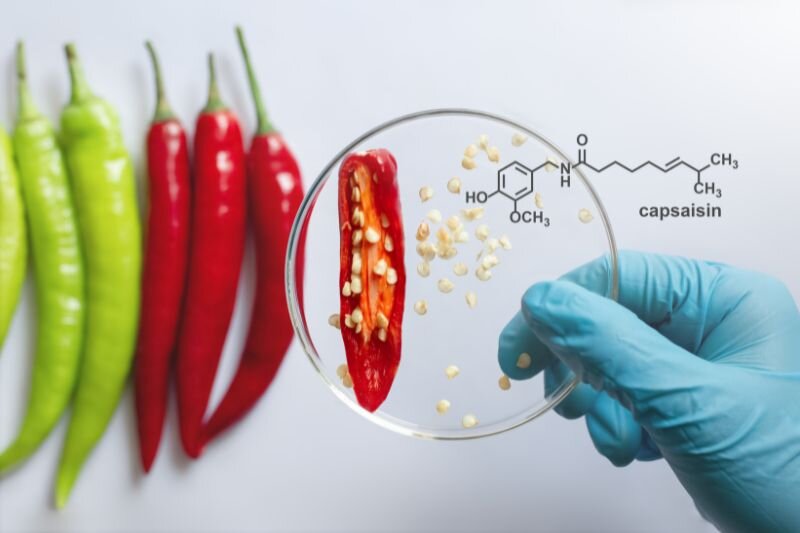
In recent years, research on ADHD has progressively moved away from an exclusively brain-centered view, opening up to more complex and integrated models. One of these is the microbiota-gut-brain axis, now considered a key element in the modulation of cognitive functions, behavior, inflammation, and neurotransmission.
A review published in 2025 in Frontiers in Nutrition explored an interesting hypothesis:
→ some components of chili pepper, particularly capsaicin, could influence ADHD symptoms through the gut microbiota.
ADHD: a multifactorial condition
ADHD cannot be traced back to a single cause. It is the result of the interaction between:
- genetics and epigenetics,
- neurobiological development,
- systemic inflammation and neuroinflammation,
- neurotransmitter metabolism,
- environmental factors, including diet.
In recent years, the idea that the gut microbiota can modulate some of these processes, influencing attention, impulsivity, emotional regulation, and stress response, has strongly emerged.
The role of the gut microbiota
The microbiota communicates with the brain through:
- production of metabolites (SCFA such as butyrate, acetate, propionate),
- modulation of the immune system,
- regulation of inflammation,
- influence on the synthesis and availability of neurotransmitters (dopamine, serotonin, GABA).
Alterations in microbial composition have also been observed in subjects with ADHD, suggesting a possible contribution to the symptoms.
Chili pepper and bioactive compounds
Chili pepper is not just “spicy.” It contains biologically active molecules, including:
Capsaicin
- activates the TRPV1 receptor,
- has anti-inflammatory and antioxidant effects,
- can modulate the composition of the microbiota,
- in experimental models, promotes SCFA-producing bacteria.
Vitamin C
- involved in neurotransmitter synthesis,
- supports immune function,
- contributes to the control of oxidative stress.
Unsaturated fatty acids
- support the integrity of neuronal membranes,
- participate in the modulation of inflammation,
- interact with the gut microbiota.
The link with ADHD
According to the authors of the review, these compounds could:
- improve the balance of the microbiota,
- reduce systemic inflammation,
- influence neurotransmission,
- modulate behavior through the gut-brain axis.
→ Not as a treatment, but as a possible supportive nutritional strategy, to be included in an integrated approach.
What is important to clarify
It is essential to avoid simplifications and talk about a “cure for ADHD.” Moreover, there are no defined clinical dosages and studies in humans are still limited. Current evidence comes mainly from preclinical studies. It is important to emphasize that capsaicin is not tolerated by everyone, especially in cases of:
- dysbiosis,
- IBS,
- intestinal inflammation,
- visceral hypersensitivity.
Conclusions
This review opens up an interesting scenario: nutrition, even through “unexpected” foods like chili pepper, can communicate with the brain via the gut. But the key message remains:
→ there are no magic foods, there is personalization.
In the context of ADHD, every nutritional intervention must be evaluated based on:
- clinical history,
- intestinal profile,
- individual tolerances,
- neurobehavioral profile.
https://www.frontiersin.org/journals/nutrition/articles/10.3389/fnut.2025.1551650/full