

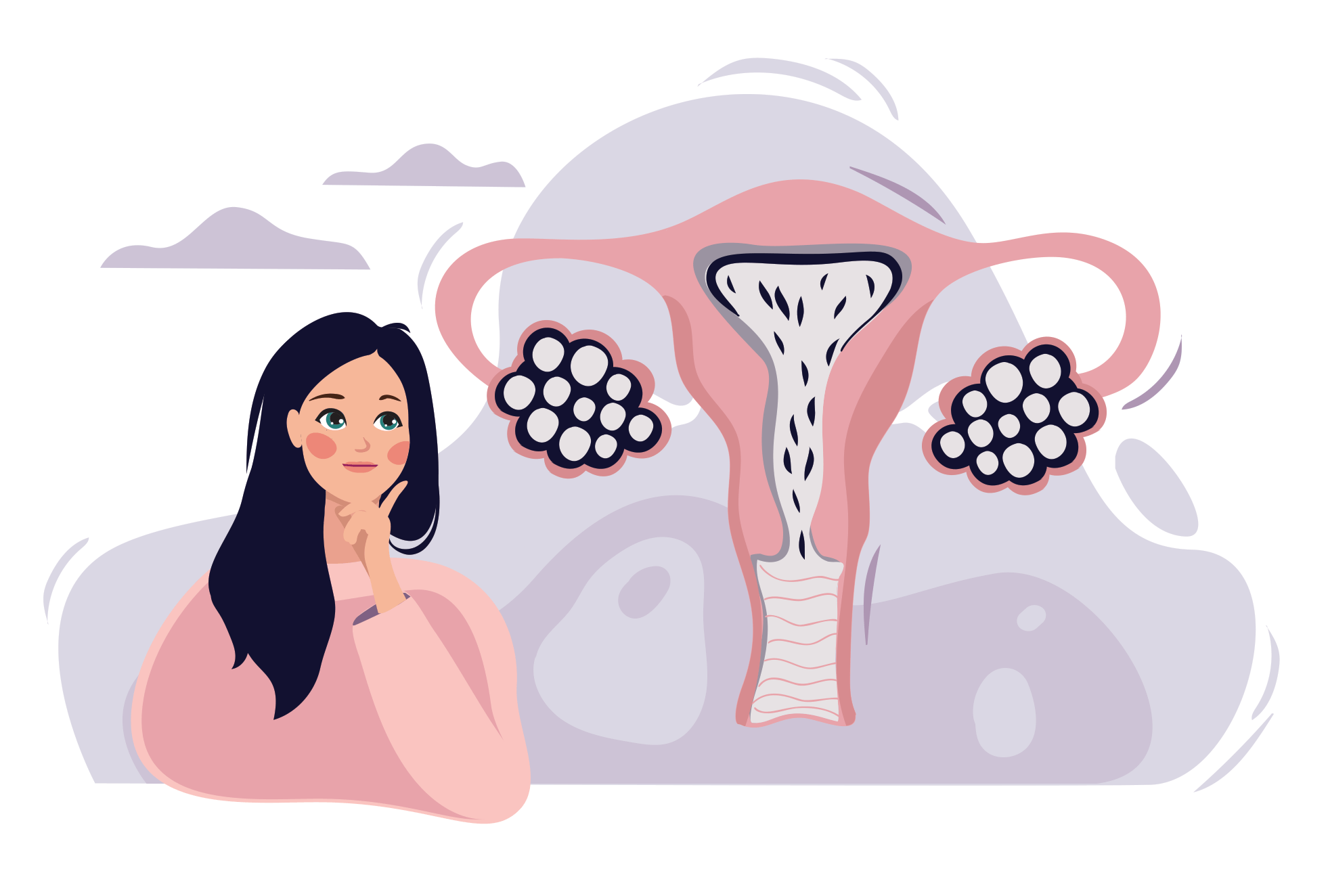
In recent years, inositols have entered forcefully into the scientific debate on women's health, becoming one of the most studied nutraceutical tools in the gynecological, endocrine, and metabolic fields. Often associated almost exclusively with Polycystic Ovary Syndrome (PCOS), their role is actually much broader and more interesting: inositols act as key regulators of cellular communication, influencing the insulin–ovary–brain axis.
Inositols are compounds naturally present in the body and in many foods, structurally similar to B vitamins. From a biological point of view, they play a crucial role as intracellular second messengers, participating in the signal transduction of various hormones, including insulin, FSH, and neurotransmitters. The two most clinically relevant forms are:
- myo-inositol (MI), prevalent in tissues and fundamental for insulin signaling and ovarian function;
- D-chiro-inositol (DCI), mainly involved in peripheral metabolic mechanisms.
Under physiological conditions, the ovary maintains an MI:DCI ratio of about 40:1, considered optimal for proper oocyte maturation.
In PCOS, one of the most frequent alterations is insulin resistance, which contributes to hyperandrogenism, anovulation, and menstrual irregularities. Numerous studies show that myo-inositol:
- improves insulin sensitivity;
- reduces androgen levels;
- promotes the resumption of ovulation;
- supports oocyte quality.
For this reason, today it is often considered a first-line nutraceutical approach in the integrated management of PCOS, even in association with lifestyle modifications.
Interest in inositols also extends to fertility, both natural and medically assisted. Myo-inositol plays a central role in FSH-dependent signaling and oocyte maturation, helping to create a more physiological ovarian environment. In various clinical contexts, it has been associated with improved oocyte competence and ovarian response.
The action of inositols is not limited to PCOS. Their role in modulating blood glucose and insulin levels also makes them useful in situations of:
- non-syndromic menstrual irregularities;
- functional amenorrhea;
- hormonal transition phases (post-pill, chronic stress, weight changes).
In these contexts, inositols can help restore more efficient communication between metabolism and the reproductive axis.
A lesser-known but increasingly interesting aspect concerns the involvement of inositols in the signaling of serotonin and dopamine, with possible effects on:
- premenstrual syndrome;
- premenstrual craving;
- mild anxiety and emotional instability.
From a PNEI perspective, inositols can be considered true mediators between metabolism, the nervous system, and reproductive function, especially if included in an anti-inflammatory and neuro-sensitive nutritional context.
In clinical practice, myo-inositol is generally used at doses of 2 g per day for 3 months, while D-chiro-inositol is used in much lower amounts, respecting the physiological 40:1 ratio. Supplementation is often associated with other micronutrients such as folic acid, magnesium, vitamin D, and omega-3.
Inositols are not simply “supplements for PCOS,” but metabolic and hormonal regulators that help the female body regain balance when communication between insulin, ovary, and brain becomes dysfunctional. Included in a personalized and evidence-based approach, they represent a valuable tool in safeguarding women's health throughout life.